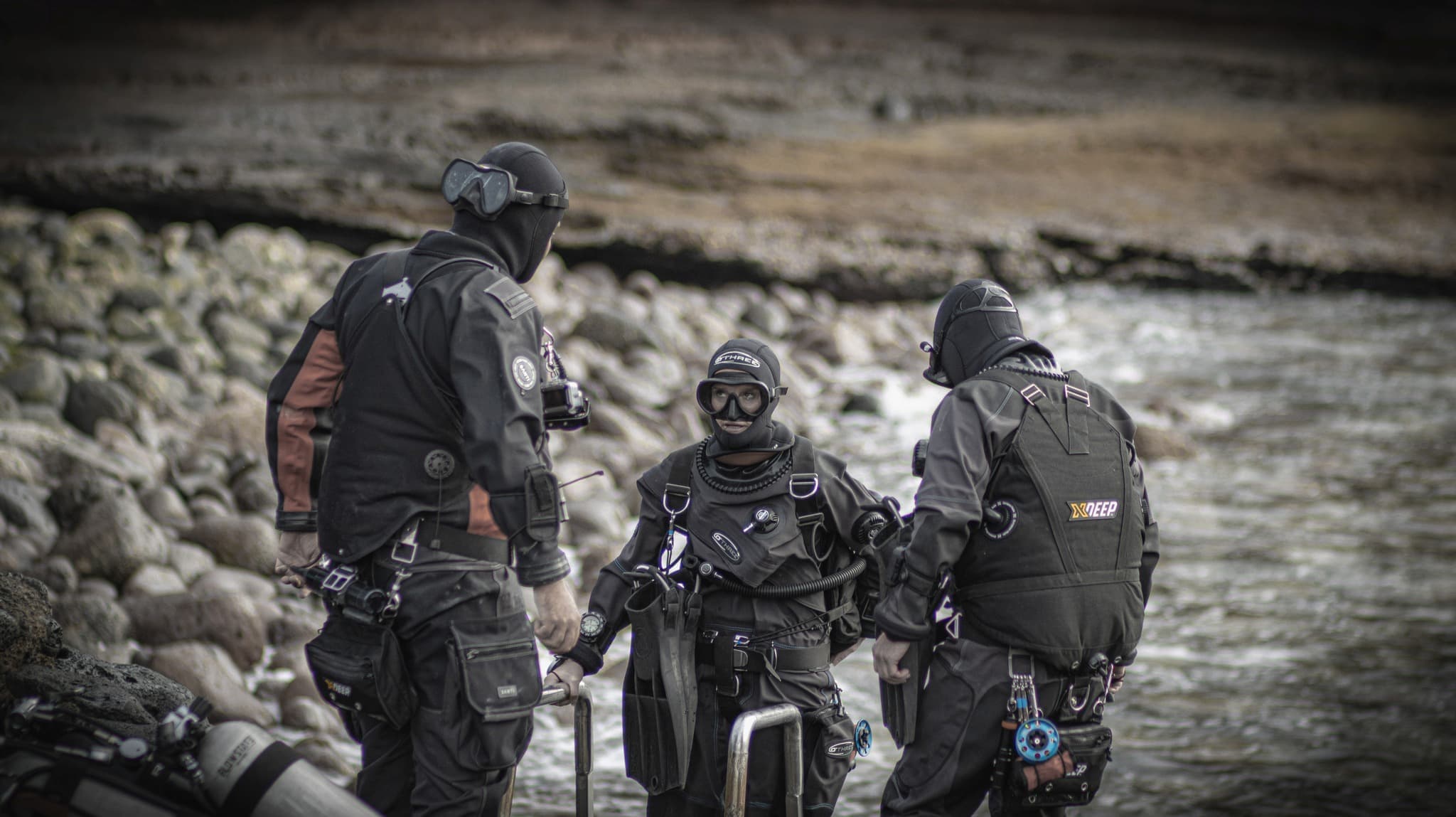
The Delusional Diver - How Modern Scuba Culture Breeds False Confidence and Real Danger
In today’s modern scuba industry, there exists a silent crisis - one not discussed openly at dive shops, and rarely acknowledged at certification agencies. It’s not about equipment failure, marine hazards, or decompression sickness. It’s more subtle, more insidious: it’s the creation of delusional divers.
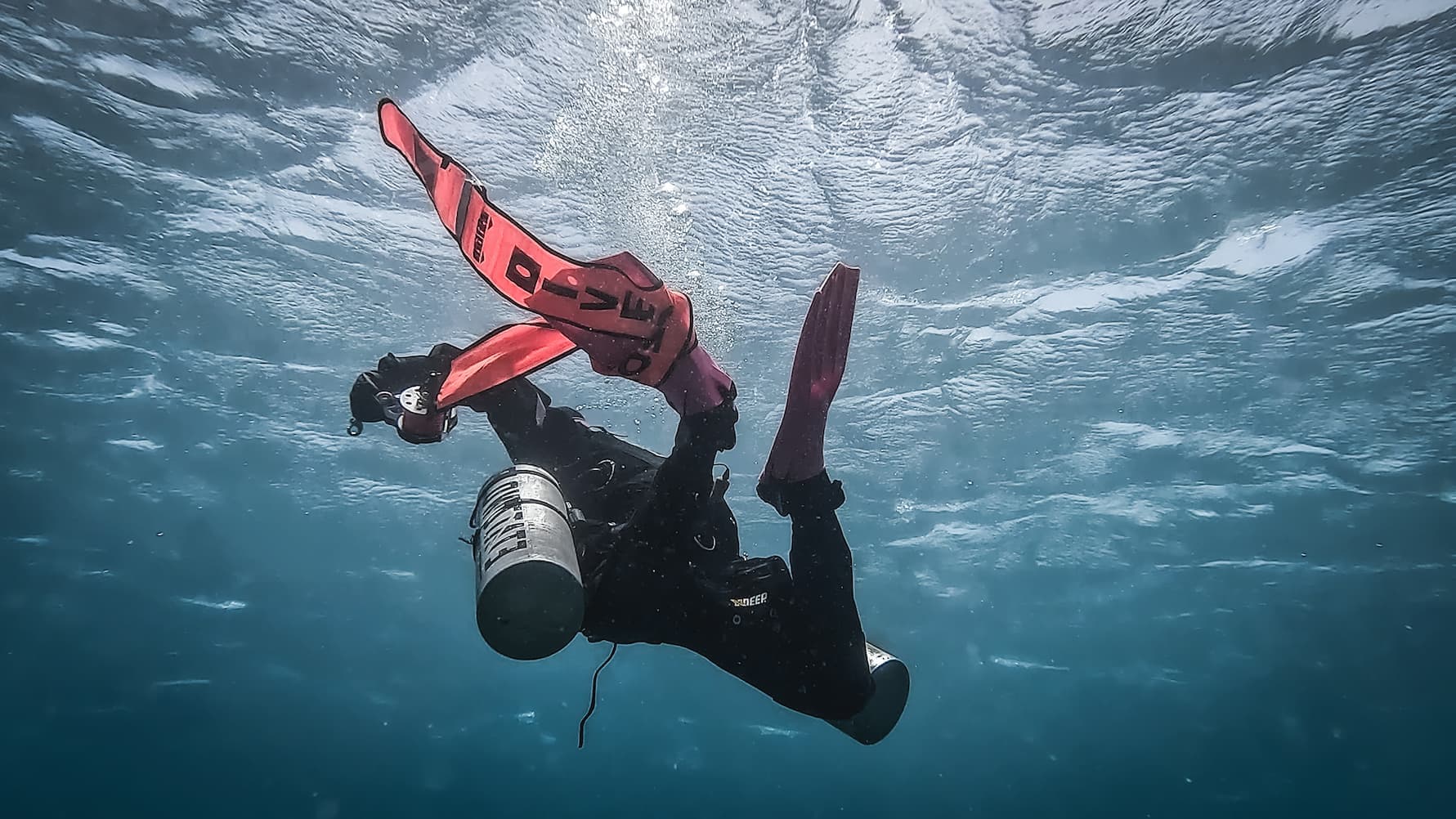
This isn't about the occasional diver overestimating their trim or forgetting a procedure. It's far deeper and more dangerous: a psychological dissonance between who divers believe they are and what they are actually capable of. It's the diver who sees themselves as a dependable teammate but panics at the loss of a mask. It’s the one who believes they’re ‘technical’ because of a card but has never been forced to confront real task loading, real risk, or real self-awareness.
At FlowState Divers, we've had the privilege - and challenge - of working with nearly 200 divers over the past two years. With very few exceptions, nearly every individual arrived with a fundamental mismatch. Not just between their certifications and their in-water capability, but more crucially - between their self-perception and their actual readiness, resilience, and diving maturity.
What’s far harder to untangle is the illusion. The belief. The internal story that they are already what their card says they are. That they’ve 'levelled up.' That they are prepared for responsibility, for risk, for team roles, for challenge - simply because they passed a course and now have the card.
This self-deception, often reinforced by the structure and marketing of modern scuba training, is what makes today’s crisis so systemic. Because when a diver believes they are already skilled, capable, and composed - when in truth they are still fragile and untested - they stop learning. And worse, they start making decisions that endanger themselves and others.
We’ve seen this illusion break apart underwater. We’ve seen divers melt under stress they believed they were trained for. We’ve seen 'tech' divers unable to problem-solve calmly in five meters of water. We’ve seen people become offended when confronted with a reality that didn’t match the narrative they’ve carried for years.
And that’s where the real danger lies. Not in a poorly executed valve drill, but in the absence of accurate self-reflection. A diver who struggles with a skill is not dangerous if they know it and act accordingly. But a diver who believes they are ready - when they are not - is a ticking time bomb.
What we’ve witnessed isn’t just disappointing. It’s dangerous. And more worryingly, it’s systemic.
The Cult of Certification: When the Card Becomes the Goal
The modern dive industry has become a machine of mass production. The training narrative has shifted from proficiency to progression - but only on paper. Divers are sold dreams: the image of the explorer, the hero, the elite underwater athlete. They're told they can become rescue divers in a weekend, instructors in a month, or technical divers in two back-to-back 'intensive' courses. The faster, the better. The more exotic the badge, the more legitimate it must be.
The result? Divers holding certifications that promise capability but deliver none. The illusion of skill has replaced actual competence.
We call them delusional divers not to mock, but to diagnose. These are not careless people. Many are passionate, curious, and genuinely eager to learn. But they’ve been misled by a system that rewards appearance over awareness, speed over substance. The system thrives on momentum: 'You’re already certified - why not go deeper, longer, colder, darker?' And so divers move forward, not realising that the only thing advancing is their belief about themselves - not their actual readiness.
The biggest problem isn’t the diver’s performance. It’s their belief about their performance.
This isn’t just a 'recreational' diving problem.
We’ve seen the same delusion echoed, almost amplified, in technical and professional diving spaces. In fact, the higher you go in the so called hierarchy of training, the more tightly ego and identity become intertwined with the card. A 'technical diver' who has never had to manage a true task load in a non-controlled environment. An 'instructor' who crumbles under pressure or shows up to coach others without having stabilised their own capacity for calm in chaos. These are not hypothetical anecdotes - they are weekly realities in our world.
Certification levels have become more than just markers of training - they have become personal titles, identities, brands. And like any identity, they become harder to let go of, harder to question. Because to admit, 'I’m not ready,' or 'I don't know,' or 'I need to go back to basics,' feels like a threat to the self. So many divers keep moving forward, layering complexity on top of uncertainty, hiding doubt under ever-thicker undergarments and more expensive equipment.
Somewhere along the way, the certification card stopped being a passport to learn - and became a trophy to prove something.
It is this internalisation of certification that is the most corrosive. Once a diver believes they are the card, they become far less capable of honest self-assessment. They stop asking questions. They resist feedback. They become offended when confronted with gaps in knowledge. And when things go wrong, they often blame the environment, gear, the conditions, or the instructor - not the illusion they’ve been living under.
And to be clear, this isn’t just about safety, although the safety implications are real and present. This is also about potential. The delusion doesn’t just make divers dangerous - it makes them stagnant. It stops growth. It robs them of the most beautiful aspect of diving: the journey. The endless depth, not of water, but of self.
We’ve had divers come to us certified to dive caves or trimix, only to realise they don’t yet fully understand how to deal with basic multitasking, how to manage themselves under discomfort, or how to be proficient or feel joy in the fundamentals. It’s heartbreaking, because many of them were never told the truth. They were never challenged with kindness. They were never invited to let go of ego and re-enter the space of the beginner - where the real magic happens.
And this is why we speak up. Not to criticise individuals, but to confront a system that has made delusion an industry norm. Because only by naming the illusion can we begin to dismantle it - and return diving to what it truly is: a practice, not a performance; a discipline, not a ladder; a path, not a podium.
The Psychology of Delusion: Why We Lie to Ourselves
The phenomenon of the delusional diver isn’t unique to scuba - it’s a mirror of the human condition. It’s the same psychology that leads a casual hiker to wander off-trail into avalanche territory, convinced they know better than the warning signs. In diving, however, the cost of this self-deception isn’t a cold night waiting for rescue. It’s your life - and there may be no one coming.
Delusion in diving is not a problem of stupidity.
It’s a problem of misalignment between perceived and actual reality - and this gap is quietly reinforced by the very structure of modern dive culture. At the core of this delusion are a few psychological mechanisms that operate invisibly inside every diver's mind:
1. The Mirage of Initial Mastery: False Fluency in Fluid Environments
In diving, early fluency can be a mirage. It’s not uncommon for a diver to feel 'comfortable' after just a few dives. They descend, they breathe, they don’t panic - everything feels manageable. And that sensation of ease becomes a deceptive benchmark: 'I’ve got this.'
This isn’t stupidity or arrogance - it’s a cognitive bias known as fluency illusion. It happens when tasks initially feel smooth or intuitive, leading us to believe we understand them deeply. In reality, that early smoothness is often surface-level. In scuba, it’s especially misleading because the environment masks complexity with calmness - until it doesn’t.
Much like reading a foreign language where you recognise the shape of words but don’t understand their grammar, many divers recognise procedures but don’t yet grasp the principles behind them.
- You can descend, but can you resolve an out-of-gas scenario on descent?
- You can navigate a reef, but can you execute a lost-diver protocol?
The water rewards repetition. But it only reveals depth of understanding in moments of stress, silence, or failure. What feels 'easy' today might simply be a lack of having seen real difficulty.
Ease is not mastery. It’s often the absence of challenge.
The illusion of mastery comes fast in diving because basic survival mimics competence. You’re breathing. You’re moving. You’re not dying. But competence - true, resilient, transferable competence - is far more elusive.
2. Ego Investment: Becoming the Role Instead of Earning It
When a diver receives an 'Advanced' card, their ego clings to the identity - I am advanced.
Every new certification becomes a piece of armor. So when their skill is questioned, it’s not just technique under scrutiny - it’s the ego itself.
This creates a powerful resistance to correction.
To admit 'I’m not ready' feels like a personal failure, not a learning opportunity.
But diving is not about titles. The ocean doesn’t care what’s in your logbook.
The strongest divers are not the ones who know the most. They are the ones most willing to admit what they don’t know yet.
3. Social Validation: The Currency of the Card
In many dive circles, respect is measured by certifications, not by conduct.
A diver with a Tech 50 card often commands admiration, regardless of how they actually move through the water.
And so begins the race - not for mastery, but for recognition.
This creates a distorted incentive system:
- Take the course, not because you’re ready, but because your friend did it.
- Pose with the new gear, not because you understand it, but because it looks impressive.
- Accumulate badges, not experience.
This culture doesn’t reward truth. It rewards presentation. And many divers, knowingly or not, begin to value the illusion of being a diver more than the work of becoming one.
4. Avoidance of Discomfort: The Inconvenient Mirror
The hardest part of any discipline isn’t the technique - it’s the humility.
To improve, you must admit what you’re doing wrong.
And to admit you’re not who you thought you were - that’s a spiritual blow.
Most people avoid this.
They’d rather push ahead than pause. They’d rather do a specialty course than revisit their foundational skills such as buoyancy or propulsion. They’d rather look confident than be competent. Because reflection requires courage. And courage is rare.
This is especially true in diving, where admitting 'I’m not ready' might mean sitting out the wreck dive everyone’s hyped for, or backing off from a cave penetration you’ve trained for on paper - but not in reality.
When All Four Forces Converge
You get a dangerous kind of certainty.
The diver truly believes they are ready.
They believe their card represents capability.
They believe their instincts are trustworthy - even when all signs say otherwise.
And when this kind of confidence enters complex environments - overhead, deep, cold, silty, technical - it doesn’t just put that diver at risk. It puts their teammates, their instructors, and rescue teams at risk. This is not a question of who’s the best diver in the group. It’s a matter of who has clarity.
A delusional diver is not someone who lacks skill. A delusional diver is someone who lacks awareness of their skill.
The Hotbed of Delusion: Where It Breeds
If delusion in diving were a disease, then many diving clubs and peer circles would be its ideal petri dish. Not out of malice. Not out of conscious intent. But out of deeply ingrained culture - one that quietly reinforces the very illusions we’ve been discussing.
Let’s take a closer look at these environments, because understanding their dynamics is one of the most important steps toward protecting your own mindset.
The Club That Worships Tenure, Not Truth
In many traditional diving clubs, hierarchy is king.
The unspoken ranking system is simple:
- How long have you been here?
- How many dives have you logged?
- How old are you?
These proxies for wisdom often go unchallenged. The diver who’s been at the club for 30 years is treated as an oracle, no matter whether their techniques are current, safe, or functional. The newest diver who asks too many questions may be subtly (or openly) discouraged.
This creates a powerful feedback loop: status is preserved by rejecting challenge.
And when status is based on age and repetition rather than true competence, delusion thrives.
The Peer Pressure of 'More Dives'
Many divers fall into circles where experience is worn like a badge:
'He’s been doing this since before you were born.' 'I’ve done 4000 dives in the last 20 years.' 'We only let people join this trip with a minimum of 200 dives.'
But none of these metrics reveal actual proficiency.
In fact, as we’ve already seen, diving the same shallow reef 500 times - or doing the same casual wreck tour for 30 years - does not build skill. It cements patterns. Often, bad ones.
Yet these circles rarely interrogate that reality. Instead, they reinforce it:
- New divers feel pressured to chase numbers instead of knowledge.
- Feedback or alternative techniques are dismissed with, 'We’ve always done it this way.'
- The loudest voices are rarely the most competent - they are the most entrenched.
And so the cycle continues.
The Know-It-All Elders
Every club has them: the senior diver who knows everything.
Or so they claim.
They may never have done a modern skills workshop. They may bristle at concepts like team diving or deliberate practice. But they’ve seen it all. And they’ll tell you so.
The danger isn’t in their confidence - it’s in their influence.
New divers watch them and internalize the wrong message:
'If I dive long enough, I will know it all too - without needing to change or improve.'
This is how bad habits and outdated mental models propagate across generations of divers.
Not through intent, but through cultural inertia.
The Comfort of the Familiar Circle
There’s also a more subtle trap: comfort. In a typical club environment:
- You dive with the same people.
- You visit the same sites.
- You debrief the same way after each trip.
- You repeat the same stories and rituals.
There is safety in this pattern.
But comfort is the enemy of growth.
In these circles, the rare diver who seeks out external training, different philosophies, or uncomfortable truths may be met with skepticism or even subtle shaming:
- 'Why do you need to take another course?'
- 'You think you’re better than us?'
- 'We’ve done it this way forever - it works.'
And so, many divers retreat back into the group narrative. The illusion is preserved. The stagnation deepens.
Escaping the Hotbed
If this description hits close to home, that’s not an accident.
We see this dynamic in every region, every diving culture, every language.
But you are not trapped by it.
The antidote is simple - though not easy:
- Step outside your circle. Train with people who will challenge you.
- Prioritise skill over status. Seek mentors, not cheerleaders.
- Question authority. Just because someone is senior does not make them correct.
- Surround yourself with those who practice, not those who boast.
Above all, remember this:
The ocean does not care about your rank in your club. It only reflects who you are, in that moment, in the water.
And in the end, that is the only reality that matters.
How to Recognise if You're a Delusional Diver
Let’s begin with a breath. Not a deep breath - an honest one.
And as you take it, quietly set a few things aside:
The defensiveness. The stack of glossy marketing flyers promising mastery in a weekend. The subtle validation loop of your buddy circle where no one asks hard questions. The growing pile of certification cards that now weighs down your dive log. The mental highlight reel of your last one hundred 'perfect' dives.
Put all of it down.
Now we can begin.
The Path Is Not Upward - It Is Inward
In diving, there is no ladder to climb. There is no summit to reach where one can proudly declare: I have arrived. There is only depth - literal, yes, but far more importantly, depth within yourself.
The path of true mastery is not a line of progression. It is a spiral, turning ever inward. Each new environment, each new piece of equipment, each new level of responsibility will peel back another layer of your self-perception and expose what lies beneath it.
And before you can move forward into more challenging dives, more responsibility, more complex environments, you must ask yourself one difficult question:
Am I living in a story that isn’t true?
The Myth We All Inherit
Being a delusional diver does not mean you are reckless, nor foolish, nor bad. It means that, like nearly every diver today, you have inherited a myth - one written into the very structure of the modern diving industry.
You have been sold a story. That story whispers:
'If you collect enough certifications, you will become a good diver.'
'Advanced means advanced.'
'If your logbook says 100 dives, you are experienced.'
'You can master sidemount, rebreathers, cave diving, or trimix in a back to back course fashion.'
The industry sells this story because it is convenient, profitable, and scalable. It appeals to our deepest psychological drivers: the need to feel competent, the need to belong, the need to prove ourselves.
But the ocean is indifferent to your story. It responds only to the decisions you make and the competence you have built. If those two things do not match, the ocean will eventually expose the truth - sometimes harshly.
Why It’s So Hard to See Yourself Clearly
Most divers do not realise they are living inside this myth. Why would they? Everything around them reinforces it.
It is not easy to recognise that you are on this path. But recognise it you must.
The Signs of Delusion
One of the most common signs of delusion is the belief that passing a course means you've mastered its content. You ticked the boxes. You got the card. But that doesn’t mean the skills are yours. Most diving courses are introductions, not endpoints. A rescue certification doesn’t mean you’ll perform in a real emergency. A deco card doesn’t mean you can think clearly at depth. A sidemount card doesn’t mean you’re efficient, streamlined, or ready for failure scenarios. Real mastery begins where the course ends - with repetition, refinement, and independent practice, often over months or years.
Another glaring warning sign: you've never been told you're not ready. Never failed. Never received blunt, uncomfortable feedback. If no instructor has ever said, _'You shouldn’t be diving here yet,' or 'You need to fix this,' then you likely haven’t been pushed far enough. Learning without pressure, challenge, or friction builds a false sense of confidence. In real training environments, feedback hurts a little - because it breaks the ego to build the diver.
Watch your response to criticism. If your instinct is to defend, explain, or blame - whether it’s a teammate, your gear, or conditions - you’re not protecting your safety; you’re protecting your self-image. Do you bristle at feedback? Downplay mistakes? Modify your dive plans based on how others might judge you? Then you’ve moved from learning to performing. And performance is fragile without substance beneath it.
Consider how you measure experience. Is it by the number of dives logged - or the lessons learned in them? Conditions matter. Stress matters. Awareness under pressure matters. Ask a better question: How many dives made you better?
Beware the constant pursuit of the next certification. If your dive calendar is always packed, if your next course is always booked, if the end of one course just cues up the next - pause. Are you chasing growth, or chasing a sense of identity? The best divers often hold fewer cards but spent far more time between them. Reflection, repetition, and self-led development matter more than your collection of credentials. A true diver isn’t chasing more - they’re perfecting less.
Look closely at your dive objectives. When was the last time you dived with no goal except to practice? No wreck, no photos, no glory. Just trim. Buoyancy. Shutdowns. Ascents. Propulsion. Rescue drills. The kind of training no one films and not many applauds. If the only time you practiced skills was during your last course, they don’t belong to you. They were rented, not owned. And without repetition, there is no integration. Without integration, there is no true competence.
Also, reflect on your environment. Are you choosing teammates, instructors, and dives that challenge you - or those that validate you? Are you seeking out discomfort and accountability — or applause and reassurance? Growth lives in tension. Delusion thrives in comfort.
Finally, beware of mistaking time for depth. 'I’ve been diving for 20 years' sounds impressive - but what have you done with those years? If you’ve spent decades repeating shallow, low-stress dives with poor habits, you haven’t earned 20 years of experience. You’ve relived your first year, 20 times over. The ocean doesn’t care how long you’ve been diving. It cares how well you dive when things go sideways.
Ask yourself:
- Am I refining my skills deliberately, or repeating patterns unchallenged?
- Am I clinging to my years as proof of competence - or standing on actual, tested ability?
Because no amount of time will erase bad habits. And no habit becomes mastery without effort, intention, and evolution.
Longevity without growth is not experience. It’s just a deeper form of delusion.
If These Ring True… What Now?
You are not broken. You are not alone. Every diver - every single one of us who has walked this path - has faced these same temptations:
- The desire to be perceived as advanced before being ready.
- The pull toward recognition rather than repetition.
- The comfort of a story about yourself, rather than the discomfort of its truth.
The best divers you admire today didn’t avoid delusion. They walked through it - often painfully. They dismantled it piece by piece, sometimes with great humility, sometimes after hard lessons.
Self-awareness is the first true piece of dive gear you ever own.
And now, if some of these red flags rang uncomfortably true for you, this is your opportunity - not your failure.
Your Mental Reset: Where To Begin
Mastery is not about never falling into illusion.
It is about choosing to wake up from it - again and again.
So here is your mental reset - an invitation to shift the trajectory of your diving life:
- Dive without your camera. Practice instead.
The camera can wait. The ego trip can wait. Take off the weight of performing. Go in search of presence, not proof. - Do a skills dive and treat it as sacred.
Choose a single skill - buoyancy, propulsion, valve drills, rescue patterns - and devote an entire dive to it. No goals but that. Repeat it often. Respect this practice as deeply as you respect the ocean. - Ask for honest feedback - and write it down.
Invite critique from trusted instructors or peers who have no need to please you. Write down what they say. Sit with it. Own it. Grow from it. - Pause your certification journey. Let skills ferment.
You are not falling behind by pausing. You are accelerating. Time is not your enemy - false momentum is. Let mastery simmer. Let it soak through your habits and your mindset. The next card will still be there when you are truly ready to honour it. - Surround yourself with those who challenge you more than they cheer you.
Seek out communities where excellence is prized over praise. Dive with those who will hold you accountable to your potential, not those who stroke your ego. These are your true allies.
The Reward: What Lies Beyond the Illusion
Diving, more than many other pursuits, will reflect back who you really are - if you let it.
When you stop performing for others, or for your own internal myth, a strange and beautiful thing happens:
You begin to dive clean. Free. Present.
You become more aware, not just underwater, but in yourself:
- Less chatter.
- More awareness.
- Less defense.
- More curiosity.
- Less status chasing.
- More substance.
And if you are brave enough to confront these illusions, to strip them away and meet yourself as you truly are in the water - you will find something far better than the shallow glow of confidence:
You will find clarity.
And clarity, unlike confidence, is quiet.
It does not seek validation.
It prepares you for mastery.
And mastery, in diving, is not about impressing others.
It is about knowing that, in the moment when it matters most - when the lights fade, when the silt blinds you, when the valve sticks, when the exit is far away - you are ready.
Because you earned it.
The Weight of the Mirror: Building a New Diving Culture
At FlowState Divers, we don’t sell fast-tracks. We don’t hand out easy praise or play along with the illusion that a certification card equals competence. What we offer is far more uncomfortable - and far more valuable: clarity.
We hold up the mirror. Not because we enjoy criticism. Not because we want to gatekeep. But because someone must. Diving, done properly, demands presence, humility, and precision. It does not care about your card, your logo, or how many specialties you've collected. It cares how you behave under pressure. And so do we.
Students often arrive confident, certified, and enthusiastic - yet unprepared. They’ve been run through a system that trains for performance, not presence. One that rewards completion, not competence. One that soothes the ego instead of developing the skill. They arrive with expectations. What they meet is truth.
We say what others should have said long ago:
- You are not ready.
- You’re diving gear you don’t yet understand.
- Your buoyancy won’t hold in this environment.
- Your mindset is fixated on achievement, not awareness.
These aren’t personal attacks. They are interventions. Not for judgment, but for growth. We are not here to shame anyone. In fact, the divers who make the greatest strides are those who come open - willing to let go of image, to begin again, to build something real from the ground up.
That’s why we do this work. It isn’t glamorous. It’s often thankless. But it matters. Because we’re not just teaching courses - we’re performing rehabilitation on a diving culture that too often prizes image over integrity. And we’re inviting those who are ready into something deeper.
This is not a call to elitism. This is a call to honesty. A call to replace convenience with intention. To choose the harder path - not for ego, but for mastery. To practice when no one is watching. To accept feedback without defense. To shed illusion and see what’s truly there.
The industry may not change overnight. Fast certifications and shallow standards will continue to echo across dive shops and Instagram feeds. But you still have a choice. You can choose the longer road. The quieter one. The one that replaces status with substance.
You can become the kind of diver who doesn’t just check boxes - but who shows up, every dive, with calm, composure, and trustworthiness.
Not because you’ve earned a title.
But because you’ve earned yourself.
This path offers no shortcuts. No medals. Just the daily, unglamorous work of practicing, refining, and showing up with intention.
And that, paradoxically, is where the beauty lives.
In that quiet space underwater, far from accolades and noise, you’ll find something richer than recognition:
- You’ll find presence.
- You’ll find discipline.
- You’ll find real mastery.
So dive not for validation, but for truth.
Not for the next badge, but for the craft itself.
Dive with humility. With courage. With clarity.
And together, let’s build a new culture - one where honest diving is no longer the exception, but the norm.