Scuba diving involves several key skills and principles that underpin a safe and enjoyable underwater experience. While buoyancy control is widely recognized as a fundamental skill, the concept of trim - the diver’s balanced body position in the water - often remains less understood or even neglected. Yet, trim is the second pillar of diving that directly influences energy efficiency, air consumption, underwater control, and environmental protection.
Unfortunately, rushed training and packed dive schedules often lead to trim being overlooked. This oversight can cause unnecessary physical effort, increased air usage, and diminished underwater responsiveness. Understanding and mastering trim is essential to becoming a proficient diver who moves gracefully through the underwater world with minimal impact.
Trim is frequently mistaken as simply "being horizontal in the water." While a horizontal position is part of it, true trim is far more nuanced. It means achieving a state of equilibrium where a diver’s body can maintain any position - horizontal, vertical, or otherwise - in a neutrally buoyant state, without involuntary movements to correct imbalances.
In practical terms, proper trim is a delicate balance: the diver remains stable and relaxed, with just enough slight tension in the lower back to maintain control, without the body tipping forward or backward. This balanced state allows divers to move efficiently and quietly, reducing fatigue and conserving air.
- Energy Efficiency: When trim is off, a diver must constantly adjust body position using muscles, especially legs and core. This wastes energy and accelerates fatigue.
- Reduced Air Consumption: Efficient movement and less struggle translate directly to lower breathing rates and longer dive times.
- Enhanced Responsiveness: Balanced trim allows quick, controlled movements, crucial for safety and interaction with the environment.
- Environmental Preservation: Maintaining proper trim reduces unintended contact with fragile corals or stirring up sediment, helping protect underwater ecosystems.
Many divers habitually place all their lead weights around their waist on a belt. While convenient, this method often fails to align the diver’s center of gravity with their body’s center of buoyancy, especially when wearing additional gear like tanks, wetsuits, or backplates. This misalignment usually causes the diver to tilt backward or forward, disturbing trim.
- Weight belts remain a common tool.
- Trim pockets on cam bands around the cylinder allow placement of weights higher on the body.
- Extra tank bands can hold weights lower on the tank, below the waist level.
- Weights can also be secured directly to backplates or threaded through harness webbing, including crotch straps.
The key is even distribution that aligns weight close to the diver’s center of gravity for optimal balance.
Before making any weight adjustments, it’s crucial to evaluate your current trim with a simple exercise:
- Assume a horizontal position parallel to the seabed.
- Relax your feet and arms completely.
- Maintain a slight tension in your lower back - enough to hold position without resistance.
- Observe your natural tilt without trying to correct it using your legs.
If your body begins to tilt forward or backward, this indicates misplacement of weight or incorrect weighting.
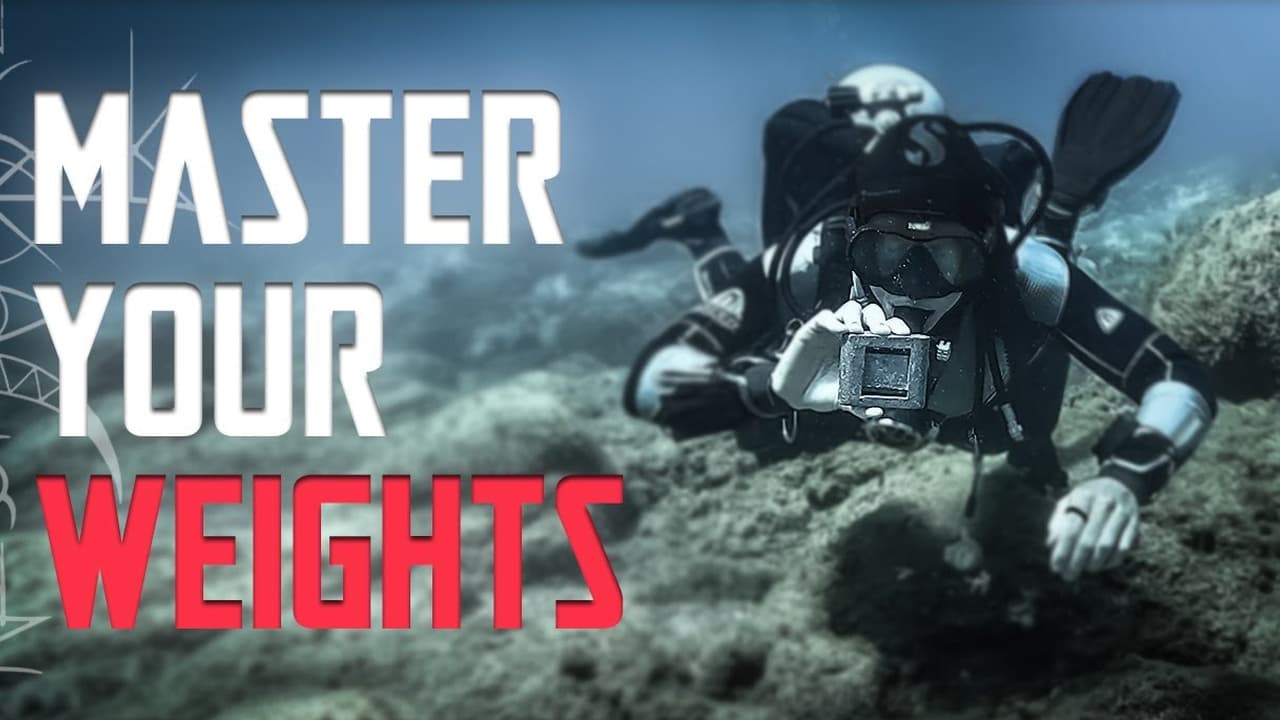
In the video example, the diver initially carries four 1 kg weights all positioned low on the cylinder, mimicking a typical weight belt situation around the waist. The result? The diver struggles to maintain trim and tends to tilt backward.
To correct this, the diver takes half of the weight and gradually moves it along the torso while remaining relaxed. This adjustment helps identify the “sweet spot” where balance is naturally achieved - generally around the lower edge of the shoulder blades.
Spend time experimenting with this positioning. The goal is to feel the difference rather than forcing your body into position with fin kicks or arm movements, which can mask true imbalance.
Once the ideal position is found, weights should be secured firmly and safely. Common methods include:
- Attaching weights to trim pockets on cam bands.
- Securing weights to a backplate using zip ties.
- Threading weights through harness webbing, including crotch straps if necessary.
The critical consideration is to keep weights as close to the body as possible, aligning with the diver’s center of gravity to maintain stability and trim.
Fins are often overlooked but can significantly impact trim. Different fin materials (plastic, fiberglass, carbon fiber) have varying buoyancy characteristics that affect how your legs float or sink.
If, after adjusting weights, you still notice your legs sinking or your body tilting backward, evaluate your fins. Sometimes replacing fins with more neutrally buoyant options can help achieve ideal trim.
For divers with unconventional gear configurations or technical setups, traditional weight distribution might not suffice. In such cases, innovative methods like threading weights onto harness webbing or strategically placing weights on the crotch straps are effective - as long as weights remain close to the body to avoid destabilising the trim.
Mastering trim is not a one-time task; it requires regular checking, experimenting, and fine-tuning as gear or conditions change. The benefits of proper trim - efficiency, safety, comfort, and environmental responsibility - are well worth the effort.
By understanding and applying the principles of trim, divers gain greater control over their underwater experience, allowing them to enjoy longer, more relaxed dives while minimising their ecological footprint.