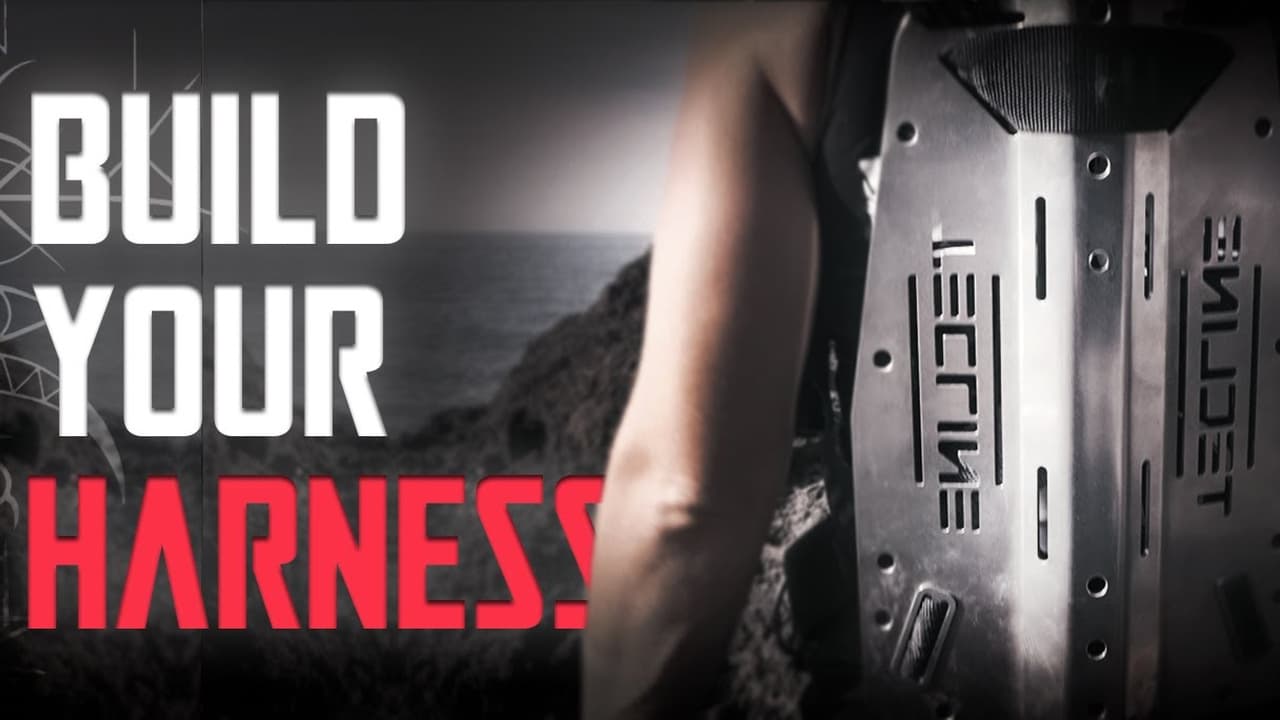
In the modern diving world, the resurgence of the backplate and wing system has been marked by a blend of nostalgia and functional rediscovery. While once confined to the fringes of technical diving, this setup has now rightly earned its place across a broader range of underwater disciplines - from recreational to exploratory. The video segment you’ve just watched served as a technical guide to selecting and integrating the buoyancy compensator - the wing - into your harness system. This article goes further. It expands the philosophy, context, and nuances behind that advice and serves as a rich companion resource for divers who are curious, committed, and perhaps even on the verge of ditching the plastic-card paradigm for good.
One of the most enduring myths in scuba is that backplate and wing systems are solely the preserve of “tech divers.” This belief, often perpetuated by commercial training agencies and retail-driven gear culture, reflects more about marketing than reality. In truth, a backplate and wing offers unmatched stability, modularity, and efficiency for all divers - regardless of depth or gas choice.
At its heart, the wing is simple: a sealed air bladder, engineered to offset the negative buoyancy caused by the gas you carry. That’s it. But this simplicity, when approached with precision and purpose, unlocks a world of difference in how you move, balance, and feel underwater.
Let’s examine the wing not just as a product but as a tool. Like all tools, its utility lies in the details of its design.
The donut-shaped wing - a continuous loop - is considered optimal for single-cylinder configurations. Why? Because it allows for even gas distribution, with 360° migration inside the bladder. This ensures predictable venting and stable trim.
The horseshoe wing, by contrast, interrupts this flow. The lower ends are sealed off, which can trap gas unevenly. These are typically wider and hug the tanks more - providing some roll stability but often at the cost of predictability in buoyancy control. While they may suit double-cylinder or sidemount divers, they are generally ill-suited to single tank backmount diving, particularly for those seeking clean, DIR-style trim and control.
Wings are typically made with a replaceable inner bladder, housed within a protective outer shell. This setup provides durability and serviceability - two traits essential for any diver who values longevity and reliability over aesthetics.
Avoid single-shell designs with no replaceable bladder. If punctured, the entire unit must be replaced. Not only is this wasteful, it’s also financially and operationally unsound.
This is a seemingly minor detail that has huge implications. A properly placed left-side dump valve allows the diver to retain the right hand for more critical functions - such as managing a long hose during an out-of-gas scenario. Some manufacturers inexplicably place this valve on the right, violating fundamental DIR (Doing It Right) principles and compromising team safety.
Also important is cord length. Too long, and it may snag on your SPG D-ring or cause unintended venting. A 4cm cord is optimal, and it should be trimmed and re-knotted, not just tucked away.
Choosing the right wing size is often overlooked, with many divers erring on the side of "more lift = better." This could not be more wrong.
The purpose of the wing is to offset the weight of the gas you carry - not to lift your entire rig or act as a life raft. Let’s run the maths:
For a typical 11.1L (80cf) aluminium cylinder filled to 200 bar:
- Gas volume = 11.1 × 200 = 2,220 litres
- Air weight per litre ≈ 1.29g
- Total gas weight = 2,220 × 1.29g ≈ 2.8kg
Thus, your wing should provide at least 3kg of lift. Add a small buffer to compensate for marginal imbalances, but don’t go overboard. Oversized wings are draggy, inefficient, and destabilising.
Unfortunately, no manufacturer makes a 3kg wing, but single-tank wings often start around 5kg/11lb, which is a reasonable fit. Just remember: this logic only works if you're correctly weighted.
While not essential, an aluminium single tank adapter is highly recommended. It provides a stable platform for mounting the tank and simplifies the threading of cam bands - especially for those new to rigging a backplate. Aluminium keeps weight down, particularly useful when diving in warmer waters or with minimal ballast needs.
Most divers treat cam bands as generic straps, when in reality they are load-bearing anchors.
- Choose bands with metal buckles - not plastic. The increased tension capacity prevents slippage and maintains tank alignment.
- The webbing must be one continuous piece, stitched to the buckle. Avoid models that rely on plastic tri-glides or hook-over methods. These weaken over time, especially after repeated removals and adjustments.
- Follow proper threading protocols. An incorrectly threaded cam band can open on entry, potentially releasing your cylinder mid-dive. This is not theoretical - it happens.
Use two cam bands, not one. A second band ensures vertical alignment and prevents cylinder slippage that can cause your trim to deteriorate and your balance to falter.
Improper venting is one of the most common challenges when using wings. Most divers instinctively reach for the cord - but this is inefficient. Instead:
- Locate the valve body itself.
- Pinch around it - the cord will always be centrally located.
- Assume a slightly head-down position (25°) and roll 10° to your right.
- Pull the cord upwards, not sideways.
This creates the ideal gas pathway, allowing trapped air to escape efficiently. Fumbling at shoulder level or pulling the cord laterally disrupts this pathway and is often ineffective.
Dual-bladder wings are sometimes hailed as redundant systems for deep or exploratory dives. But redundancy, in this case, comes at a cost.
Every added bladder is another potential failure point - and if both begin to fill unintentionally (a “runaway wing” scenario), managing buoyancy becomes near-impossible, especially under stress. Our stance is clear: unless you're working in highly specific overhead environments with mission-critical gear transport, single bladder wings are safer, simpler, and more appropriate.
At FlowState Divers, gear is not about fashion or collecting badges - it’s about functionality, efficiency, and mastery. Every component must serve a purpose. Every adjustment must be intentional. The backplate and wing system is not a gimmick nor a tech-exclusive secret; it’s a toolset that unlocks cleaner trim, better stability, and more confident diving for those who approach their training with clarity.
For divers willing to move beyond standardised templates and into a realm where self-reliance, discipline, and precision rule, the wing is not just a lift device - it is a gateway to transformative diving.