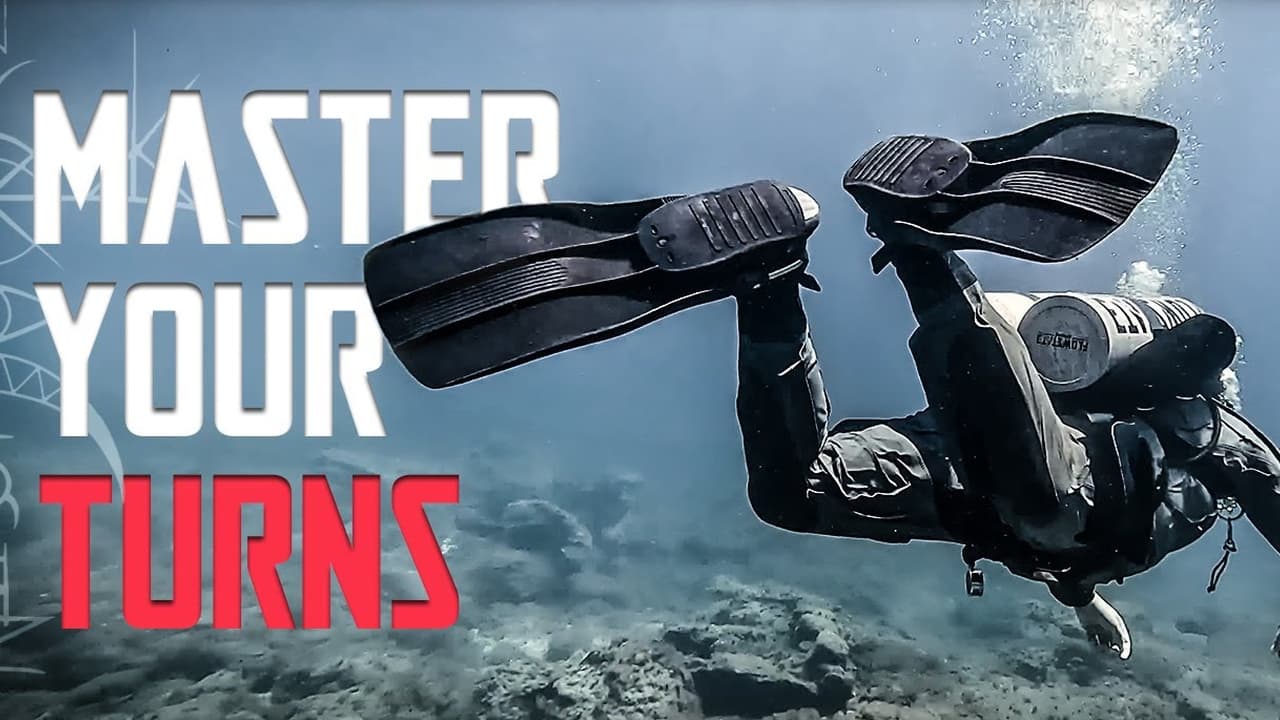
The back kick is one of the most powerful and versatile propulsion techniques in scuba diving. More than just a way to move in reverse, it is a hallmark of control, efficiency, and spatial awareness. Much like the frog kick and the helicopter turn, the back kick originated in overhead diving environments - caves, wrecks, and other confined spaces - where a diver's ability to maneuver without disturbing the environment or making physical contact with surfaces is essential for safety and preservation.
But its utility extends far beyond those technical settings. The back kick is a core technique that enhances every diver’s situational control, positioning accuracy, and team awareness. Without it, a diver is metaphorically “one-legged” - restricted to moving forward only, which can be a severe limitation in dynamic, multi-directional underwater environments. Imagine walking on land without ever being able to step backward; this is precisely the kind of restriction you face without mastering the back kick.
While originally developed out of necessity, the back kick has evolved into a fundamental skill for any diver who values control and finesse. In team diving, maintaining your position relative to your buddies or instructor is not just a matter of convenience - it’s a safety imperative. Without the ability to adjust your distance by reversing slightly, you'll often find yourself too close or constantly having to swim in a wide arc just to reposition.
The back kick allows divers to subtly retreat from confined areas, avoid silting out the environment, back away from hazards, or simply hold station without constant fin adjustments. It is an elegant, efficient solution that enhances both safety and comfort underwater.
To successfully learn the back kick, it’s helpful to divide the movement into two distinct phases: the setup and the stroke.
Before any movement begins, trim and body tension must be established. Your body should be horizontal, neutrally buoyant, and aligned with minimal drag. Failure to set this up correctly often leads to unintended vertical motion, or worse, a finning action that has no directional effectiveness.
- Legs: Extend your legs behind you, knees brought closer together.
- Fin Position: The fin tips should be slightly downward, roughly level with your kneecaps.
- Core Engagement: Maintain tension in your core and glutes to prevent sagging or kicking from the hips, which breaks trim.
- Head and Spine: A forward-facing, aligned head position keeps your body in balance and improves proprioception.
Once setup is achieved, the stroke phase begins. This is where the backward motion is generated.
- Ankle Curl: Without dropping your knees, draw your ankles gently toward your glutes.
- Outward Rotation: Slightly rotate your ankles outward - this exposes a greater surface area of your fins to the water, enhancing propulsion.
- Fin Pressure: You should feel pressure against the tops of your fins, indicating water is being pushed backward effectively.
- Slow Reset: Perhaps the most overlooked aspect - reset your legs slowly. A rushed recovery will cancel out the backward motion you just generated. Aim for a reset that is at least twice as slow as your kick.
Precision in ankle control, not brute leg strength, defines an effective back kick. Both ankles should stay under light tension and maintain the correct angle throughout the movement. If the fin tips start drifting upward or losing angle, the stroke loses effectiveness and introduces instability.
Learning the back kick is a marathon, not a sprint. It’s not a technique you can brute-force in a weekend. Progress may feel slow or even nonexistent at times - and that’s perfectly normal. The muscles used, particularly in the hips, glutes, and ankles, aren’t usually trained in this way. Plus, it requires intense body awareness and refined buoyancy control, which most divers are still developing.
- Calm Conditions: Always begin in calm, current-free environments. Avoid surge zones or poor visibility.
- Short Sessions: Practice in short 3-4 minute sets with rest in between. Once frustration kicks in, it’s time to stop for the day.
- Surface Support: Make use of visual references like a tied-off spool or line at eye level. This helps monitor your position and gives instant feedback if you’re unintentionally rising or sinking.
- Distance: Don’t stray too far from the line - 10 meters is often enough depending on visibility. After a few meters, reel in and reset.
- Video Feedback: If possible, have a teammate record your attempts. The visual feedback can be enlightening and speed up your learning curve.
One of the major reasons divers struggle with the back kick is not the technique itself, but the lack of foundational skills. Back kick mastery assumes a high degree of control over buoyancy, trim, and breathing patterns. Even slight imbalances will translate into exaggerated movements or ineffective strokes.
Before attempting the back kick:
- Make sure your trim is level and consistent.
- Your buoyancy should be neutral at depth and stay unaffected by small changes in breathing.
- You should be able to hover motionless without using your hands or fins.
If you can’t confidently maintain these basics, focus on them first. There's no shortcut around this step. Trying to learn the back kick on a shaky foundation is a recipe for frustration.
Although it may seem daunting at first, the back kick is a skill that pays dividends for the rest of your diving life. It represents more than just a fancy movement - it is a demonstration of control, maturity, and situational awareness underwater. Divers who can back kick seamlessly tend to display calmer behaviour, tighter team cohesion, and superior environmental respect.
Every bit of effort you invest into learning this technique will return to you tenfold in the form of confidence and mastery. In time, you won’t just be “moving backward” - you’ll be evolving as a diver.
So, if you're serious about precision diving, whether for recreational exploration or technical challenges, make the back kick a cornerstone of your training. It is, without doubt, one of the most transformative skills in your underwater journey.