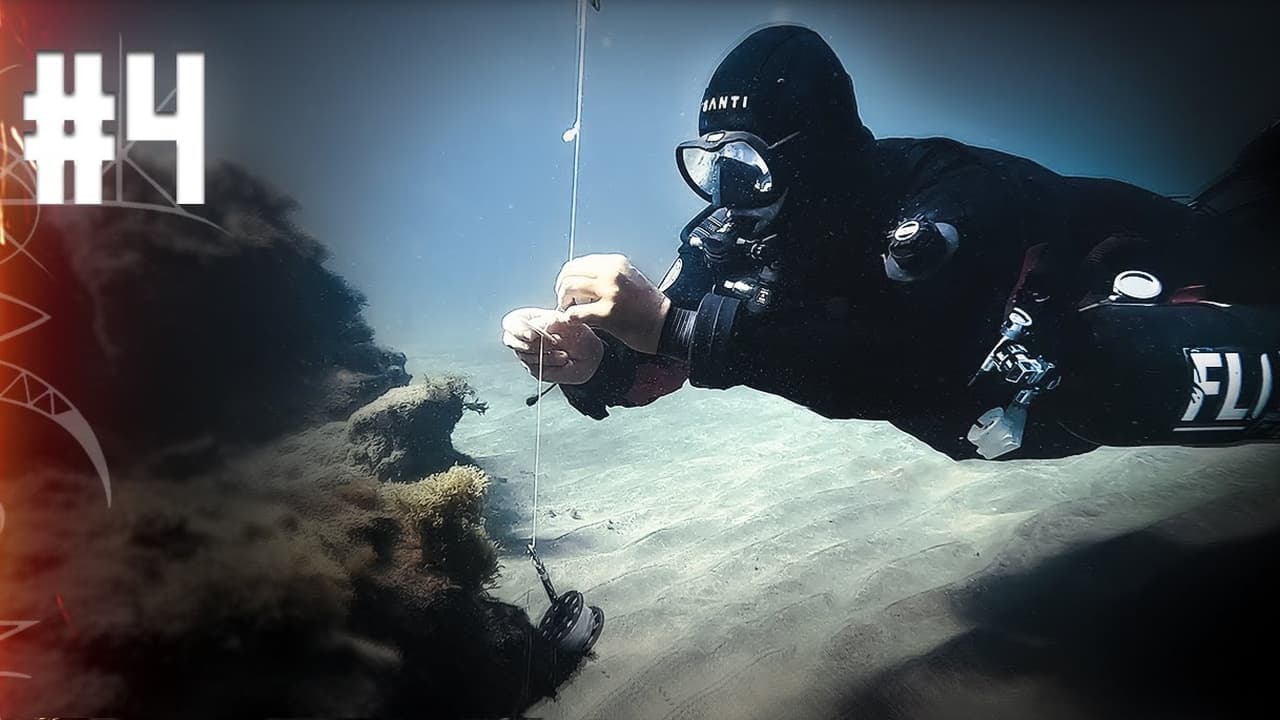
In the modern diving landscape, backplate and wing systems have become somewhat of a fashion statement - sleek, modular, and increasingly popular among divers of all levels. Yet with every passing year, as they are absorbed into the commercial mainstream, the original philosophy behind their design becomes more diluted, misinterpreted, or outright lost. The question begs: Are we truly using this system as it was intended, or merely donning it as a badge of minimalist chic without the understanding that made it revolutionary in the first place?
To answer that, we must turn the clock back to the very roots of this setup - a time when diving innovation was driven not by marketing departments but by life-or-death necessity.
The backplate and wing configuration has its spiritual and practical roots in the Woodville Karst Plain Project (WKPP) - a collective of divers in the late 1980s and early 1990s dedicated to mapping the expansive underwater cave networks of Florida. These were not recreational outings. Divers plunged into dark, uncharted systems that spanned over 1,200 square kilometres from Tallahassee to the Gulf of Mexico. Equipment failure, team miscommunication, or poor configuration meant one thing: death.
To mitigate such risks, the Doing It Right (D.I.R.) philosophy was born. It wasn’t a brand - it was a code. D.I.R. was a systematic approach that prioritised safety, standardisation, and simplicity. At its core were four guiding principles: fundamental skills, team cohesion, physical fitness, and streamlined equipment. Out of this crucible came the backplate and wing - not a piece of gear, but a platform of survival. Every component had a reason. Every attachment had a purpose.
This article is your guide to understanding that forgotten rationale and rebuilding your system the way it was originally meant to be used - thoughtfully, deliberately, and with full awareness of every element that touches your back.
Constructing your own rig isn’t just a gratifying exercise - it’s the antidote to blind consumerism. It puts you in control. You’ll gain the insight to conduct in-field repairs, understand failure points, and customise every piece to your diving environment and style. But more importantly, it brings you back in touch with the minimalist genius that underpins this system.
Start with the backplate - the structural backbone of your system. It’s available in stainless steel or aluminium, each with its own merits.
- Steel plates, often weighing between 2–6 kg, are advantageous when diving wetsuits in colder waters, as they reduce the need for additional ballast.
- Aluminium plates, on the other hand, offer lighter travel weight and greater flexibility, particularly when using steel cylinders or diving drysuits with significant undergarment insulation. Aluminium makes fine-tuning with trim weights easier and keeps your overall system modular.
The hallmark of a true D.I.R.-style harness is its one-piece continuous webbing. No quick-releases, no padding, no flashy buckles. The reasons are simple:
- Fewer failure points
- Higher strength
- Streamlined profile
- Reliability in overhead or deep environments
Purchase around 4 metres of 5cm (2") wide webbing. We recommend soft webbing, as it’s easier to handle in and out of the water while retaining long-term durability.
Once the harness is adjusted to your body, any excess webbing can be cut away and heat-sealed with a lighter. Despite modern assumptions, donning and doffing a continuous harness is entirely straightforward when sized correctly.
Your harness configuration will include:
- 4 standard tri-glides
- 3 serrated tri-glides for enhanced grip
- 2 pre-bent D-rings (for shoulders)
- 2 straight D-rings (waist and crotch strap)
- ~25cm of 4mm bungee for the inflator hose slider
- Stainless steel buckle for waist closure
- Inner tube rubber bands for retaining accessories
Every accessory should have a job. If it doesn’t serve a critical purpose, leave it out.
- Right Shoulder:
- Pre-bent D-ring secured with a tri-glide
- Inner tube band for backup light retention
- Left Shoulder:
- Inflator hose loop created from 25cm of 4mm bungee, secured with a tri-glide and tied with a fisherman’s knot
- Pre-bent D-ring and rubber retainer as on the right
Position these not for style, but for function - particularly reach and intuitive operation in zero visibility.
This is where many diver-built harnesses fail.
- Thread the webbing from the inside out. This ensures the loop hugs your shoulder and can’t slip.
- Use an extra tri-glide on the bottom slots to lock in shoulder loop sizing and prevent shifting from tank pressure.
Both sides must be symmetrical and precisely aligned for comfort and performance.
- Right Side: Left blank for possible canister light.
- Left Side: Straight D-ring for SPG, rubber retainer band, and stainless steel waist buckle.
The crotch strap might seem trivial but it anchors the system and stabilises your buoyancy on the surface.
You can either:
- Buy a pre-made crotch strap with a sewn-in DPV ring, or
- Build your own using ~130cm of soft webbing, a tri-glide, and a D-ring
Avoid the "V-style" variants - they’re unsuitable for DPV use and break the D.I.R. principles.
Adjust the crotch strap so:
- It sits flush with your waist strap
- You can slide two fingers underneath for comfort
- The D-ring at the bottom can be found intuitively by thumb in trim
This isn’t just about building gear - it’s about fitting your system to your body and your diving style.
Use these checks:
- Backplate height: Reach behind your head - your middle finger should just graze the top.
- Shoulder D-rings: Reach up in T-position, eyes closed. Your thumbs should bump into the rings.
- SPG D-ring: Your palm should fit comfortably between it and the backplate.
- Harness tightness: A clenched fist should just slide between the shoulder strap and your chest - no tighter, no looser.
After testing and confirming fit:
- Trim any excess webbing
- Melt the ends with a lighter until smooth and sealed
- Press the molten end to flatten it - this prevents fraying and adds a tidy finish
Now your harness isn't just functional - it's professional.
The backplate and wing isn’t a trendy alternative to a jacket-style BCD - it’s a manifesto. It’s a statement that you value function over flair, purpose over plastic, and competence over convenience. The modern dive industry has tried to commodify this setup, diluting it into a ‘modular lifestyle’ gimmick.
But those who understand its origin - in the dark flooded tunnels of Florida, on the edge of exploration - know better.
The system is not about customisation. It’s about eliminating everything unnecessary until only the essential remains. It’s about being prepared, being deliberate, and being skilled.