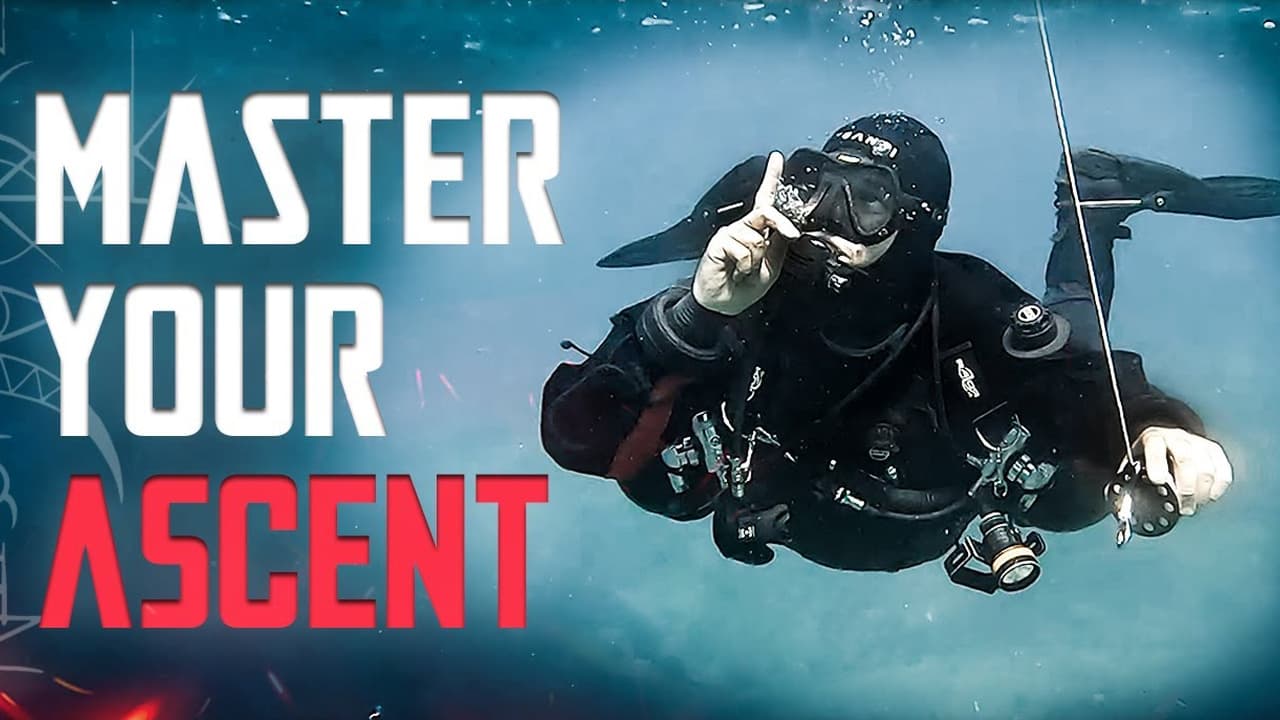
In the intricate world of scuba diving, where equipment complexity often scales with experience, the Hogarthian regulator configuration emerges as a refreshing paradox - an elegant return to simplicity, forged in the demanding crucible of deep cave exploration. Far more than just a “long hose” or fashionable technical rigging, this system is a product of function-driven design, developed by one of diving’s greatest visionaries, William “Bill” Hogarth Main. It reflects an enduring ethos: everything you bring should serve a purpose, and nothing should be superfluous.
At first glance, it’s easy to reduce the Hogarthian system to its most conspicuous element: the 2.1-metre long hose, typically wrapped neatly under the right arm, across the chest, and around the neck. This “hog loop” enables a diver to donate the regulator they are breathing from - a practice that increases safety and control during out-of-gas emergencies.
But the hose is merely the visible tip of a philosophy born in some of the world’s deepest caves.
William Hogarth Main, co-founder of the Woodville Karst Plain Project (WKPP), developed this system to meet the extreme demands of cave diving - tight restrictions, long penetrations, and zero room for failure. What emerged was a minimalist, streamlined, and redundancy-aware configuration that stripped away everything unnecessary and brought life support back to its most efficient form. Every hose, clip, and connector has a reason to be there, and a reason to be where it is.
Although commonly associated with the DIR (Doing It Right) diving philosophy, it’s important to note that the Hogarthian configuration is a specific equipment setup, not an all-encompassing methodology. Yet it forms the foundation of most DIR rigs for good reason: it works, and it works under pressure.
Most divers only consider gas-sharing scenarios in abstract terms. “Pass them your octopus,” they’re taught. But when someone is truly out of gas, and panic sets in, fumbling for a yellow backup regulator clipped to your BC - or worse, tangled behind your shoulder - wastes precious time.
The Hogarthian configuration makes a simple but powerful change: you donate the regulator you are already breathing from. You know it works. You know where it is. The recipient gets a working air source immediately. Meanwhile, your backup - rigged on a bungee necklace under your chin - is ready for you, right where it always is.
This flow is more than clever - it’s life-saving. It standardises emergency response under stress, eliminating ambiguity and hesitation. And it works just as well in open water as it does in a pitch-black restriction.
Let’s break down the core components of the Hogarthian regulator configuration, keeping the minimalist, functional philosophy in mind.
- DIN vs Yoke: Always opt for DIN connections. They are more secure and less prone to failure. If you encounter a yoke-only cylinder, a simple DIN-to-yoke adapter does the job.
- Turret and 5th Port: Not essential but beneficial. A rotating turret with a 5th LP port improves hose routing flexibility, particularly for sidemount or twinset divers.
- Environmental Sealing: A wise investment. Even in warm water, it keeps silty or sandy water out of the internal workings, reducing maintenance and prolonging service life.
- Brand-matching matters. While many modern second stages perform admirably, mixing brands between first and second stages can lead to pressure mismatches.
- Consider simple, robust models with adjustable breathing resistance if available.
- The primary goes on the long hose. The backup is on a shorter hose, secured with a bungee necklace.
- No plastic covers. Just brass and glass. This exposes leaks and corrosion early and reduces unnecessary bulk.
- Mount it with a bolt snap close to the gauge head for a clean clip-off to your waist D-ring.
- Primary long hose: 2.1m (7 feet). No compromise. Shorter hoses lose the benefit of smooth deployment and team positioning in emergencies.
- Backup hose: 55–60 cm, adjusted to your neck and jawline for comfort and streamlining.
- Inflator hoses: One for your BC, one for your drysuit (if used).
- SPG hose: High-pressure, compact, routed down the left side.
- Bolt snaps: Marine-grade stainless steel. One for your SPG, one for the long hose second stage.
- Bungee cord: For your necklace, 60 cm of 4mm shock cord, secured with an adjustable cable tie.
- Line: Thin nylon string to tie off bolt snaps. Melt the ends after trimming to prevent fraying.
Assembling a Hogarthian regulator set isn’t just about putting parts together - it’s about building a life support system with deliberate, thoughtful rigging.
- Allen keys (usually 5mm) for port plugs
- Wrenches (14–18mm) or an adjustable spanner
- Silicone grease (sparingly used)
- Nail clipper (to neatly trim cable ties)
- Plan your hose routing: Right side for primary and backup second stages, left for SPG and inflators.
- Lubricate O-rings: Every hose and connection should be visually inspected and lightly greased.
- Attach the long hose second stage: Secure the second stage and affix the bolt snap 10–15 cm below the mouthpiece. Colour-coding the hose (e.g., yellow) helps in emergencies.
- Backup regulator necklace: Mount the bungee tightly, but allow adjustability under the tie. This will help in emergencies like unconscious diver recovery.
- SPG setup: Grease the swivel O-rings, then tighten gently to avoid over-compression. Add a bolt snap near the gauge body.
- Final test: Pressurise the system slowly. Monitor for leaks. Record the pressure, wait a few hours, and check for drops. This passive test ensures everything is sealed before your dive.
- Avoid over-tightening. A common rookie error that can lead to stripped threads or overtensioned O-rings.
- Never skip the SPG swivel lubrication. It’s a moving part, and dry operation will wear it quickly.
- Resist “gear creep”. Adding gadgets or unnecessary covers undermines the very philosophy behind the system.
- Learn the hose routing through practice, not improvisation. Tidy gear is not just aesthetic - it prevents entanglement and ensures functionality under stress.
You may not be exploring underwater caves in Florida or deep wrecks off the coast of Malta, but you can still benefit from a Hogarthian-style setup. This configuration enhances teamwork, emergency handling, equipment longevity, and mental clarity. It helps create a muscle memory around your gear that will serve you across any diving discipline.
In fact, more and more open water divers are adopting the long hose setup, not because they want to be tech divers, but because they want to dive better. Safer. Cleaner. Smarter.
The Hogarthian regulator configuration isn’t a trend. It’s not just for cave divers or technical elites. It’s a solution - a practical, refined, and proven solution - to the chaos that can come with gear bloat and disorganised setups.
At its core, it invites every diver to ask a simple question: “Does this piece of gear serve a vital purpose?” If the answer is no, leave it behind. If yes, configure it to serve you - consistently, cleanly, and reliably.
That’s the Hogarthian way.