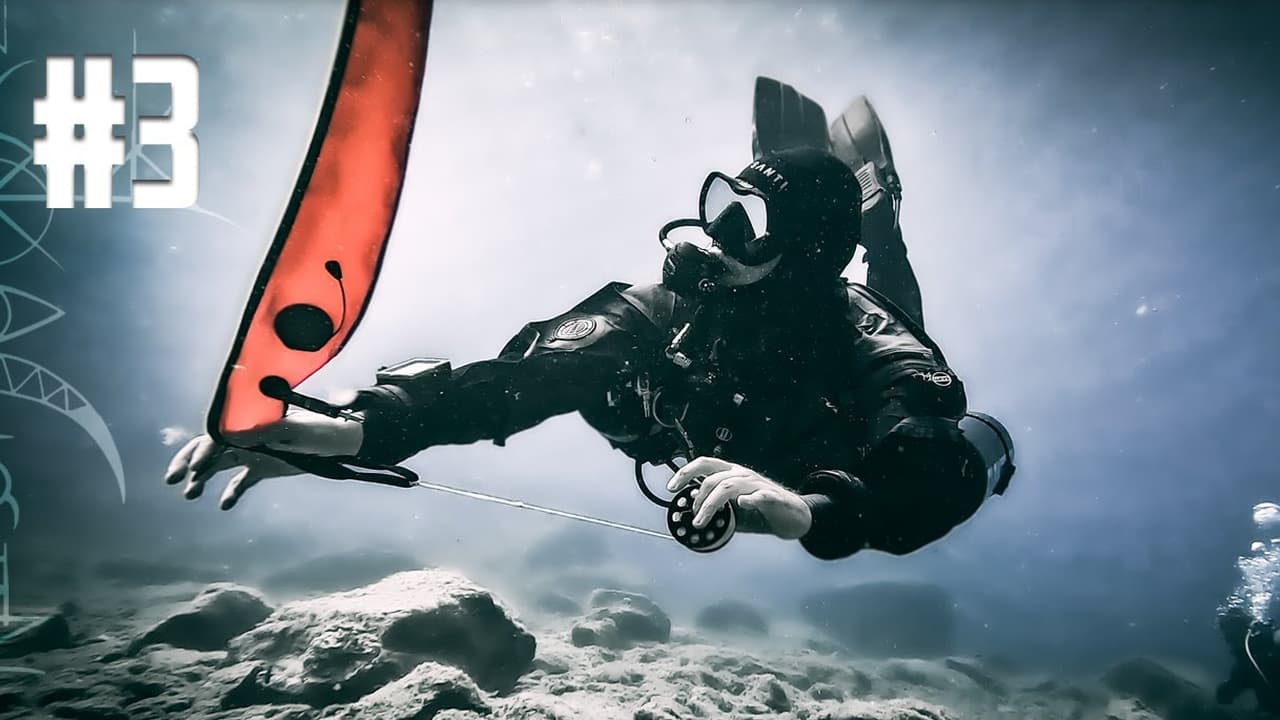
In the world of scuba diving, true mastery lies far beyond the limits of ticking boxes or collecting badges. It’s not enough to simply clock dives or repeat routine drills. To become a truly capable, self-aware diver, one must engage in a deliberate, strategic refinement of fundamental skills. Welcome to the clandestine realm of the static line - a quiet, unassuming tool that holds the power to transform your underwater ability from competent to masterful.
While it might appear simple - a line suspended in the water column - the static line is anything but mundane. It serves as a benchmark for control, a mirror to your habits, and a silent tutor revealing your strengths and flaws with clinical honesty. This article explores the depths of its application and reveals how, with intention and structure, it can elevate your practice beyond the conventional.
The static line is, quite simply, a length of line or guideline fixed in the water, either horizontally or vertically. While the concept stems from the world of cave diving, its utility extends into every realm of diving. It can be used in confined water or open water, in shallow settings like a pool or in the open sea. Whether static or dynamic skill training is your aim, the static line transforms your practice from passive repetition to immersive, feedback-rich learning.
There are two key variations: the horizontal control line and the vertical reference line. Each offers unique benefits, both of which play a vital role in refining your control, buoyancy, breathwork, and movement awareness.
This setup involves stretching a guideline between two anchor points - most commonly two DSMBs (Delayed Surface Marker Buoys) or one DSMB and a secure object like a rock or weight belt. The line is suspended at a fixed depth, parallel to the seafloor or pool bottom.
Why does this matter?
Because holding your position while keeping even the slightest part of your body aligned to that horizontal line forces you to self-correct continuously. Whether you're fine-tuning your frog kick, back kick, or helicopter turn, the line becomes your guide and your critic. You’ll instantly see - and feel - when your buoyancy fluctuates or your trim shifts out of alignment. And that feedback is gold.
The genius of this setup is that it pushes you to multitask subconsciously. You’re not just performing a skill in isolation; you’re maintaining orientation, managing your breath, reading your environment, and executing a movement - all at once. This builds muscle memory far more effectively than rote drills or passive hovering.
To rig a horizontal line using two DSMBs:
- Secure Each Buoy: Fasten each DSMB to a solid anchor - be it a rock, pier post, or weighted belt. Avoid sensitive reef or marine life, of course.
- Wrap and Reverse: Loop the line once in any direction, then cross over and reverse the loop to lock it. This simple trick ensures the line holds even under tension.
- Tension Is Everything: Use a fingerspool of 33 metres (or longer) to connect both ends. Ensure it’s taut - slack ruins feedback.
- Lock It: Use a boltsnap or double ender to secure the spool and prevent unravelling.
If you don’t have a natural anchor point available, a weight belt loaded with 4 kg of lead provides a stable alternative. It's portable, reusable, and adds no environmental burden.
If simplicity is your aim - or if time and conditions don’t allow for the horizontal setup - the vertical control line offers an elegant alternative.
With just one DSMB and a single spool, you can create a highly effective tool for static positioning and buoyancy control:
- Deploy the Buoy: Inflate and anchor it securely to the bottom.
- Attach Your Marker: Use a line marker (commonly used in cave diving) at a desired depth - 3 metres is a great starting point.
- Hold Your Position: Hover perfectly level with the marker for one full minute. It sounds simple, but in moving water or with subtle depth changes, it becomes a genuine test of control.
Once you've held position at one depth, move 1 metre shallower, place another marker, and repeat. This not only strengthens depth awareness but begins training your nervous system to make micro-adjustments in lung volume - one of the most important aspects of true buoyancy mastery.
You can improvise markers - rubber straps, clips, fin carriers, anything that can be safely affixed to the line. What matters is the exercise, not the equipment.
Let’s make one thing clear: the static line is not a toy, nor is it a gimmick. It is a mirror. A test. A guide. It tells you when your buoyancy control is genuine and when it’s an illusion. It exposes whether your kicks are effective or flailing. And it reveals whether your breathing pattern is deliberate or unconscious.
Why is this so critical?
Because too often, divers learn in silos. Buoyancy is practised in one session. Kicks in another. Breathing gets mentioned in passing. But the ocean doesn’t care about your curriculum. It demands that all of these elements operate together, in harmony, under pressure.
The static line forces this integration. It compels the diver to live their training rather than perform it.
This isn’t about choreography. It’s about adaptability, fluid control, and confidence. Once a diver masters control around a static line, that same level of awareness naturally extends into real dives. Holding at a safety stop, controlling ascents and descents, maintaining team formation, or hovering next to a reef without damage - all become second nature.
Even more importantly, training with a static line rewires your understanding of what practice really means. It no longer becomes a task to complete, but a ritual to improve. You begin to crave the feedback, and to notice subtle improvements dive after dive.
- Start shallow: 3 metres is ideal for initial sessions, especially in pools or confined water.
- Limit session duration: Focused 20-minute sessions beat 90-minute slogs. Fatigue breeds bad habits.
- Record yourself: Use a GoPro or action cam on a tripod. Feedback is ten times more effective when visual.
- Practice with intent: Don’t just “do the drill” - ask what you’re trying to achieve. Adjust, reflect, repeat.
- Use your breath: Pay attention to how subtle changes in lung volume affect your depth and trim. This is the heart of buoyancy control.
The static line is not part of mainstream training because mainstream training doesn’t prioritise mastery - it prioritises certification. But for those willing to step outside that framework, the rewards are extraordinary.
By weaving together breath control, fin technique, awareness, and subtle adjustments into one cohesive underwater dance, the static line becomes more than a guide - it becomes a doorway. A path to genuine competence. To elegance. To self-trust.
So next time you prepare for a dive, ask yourself not what you’ll do, but how you’ll do it. Find your line. And let it teach you everything.