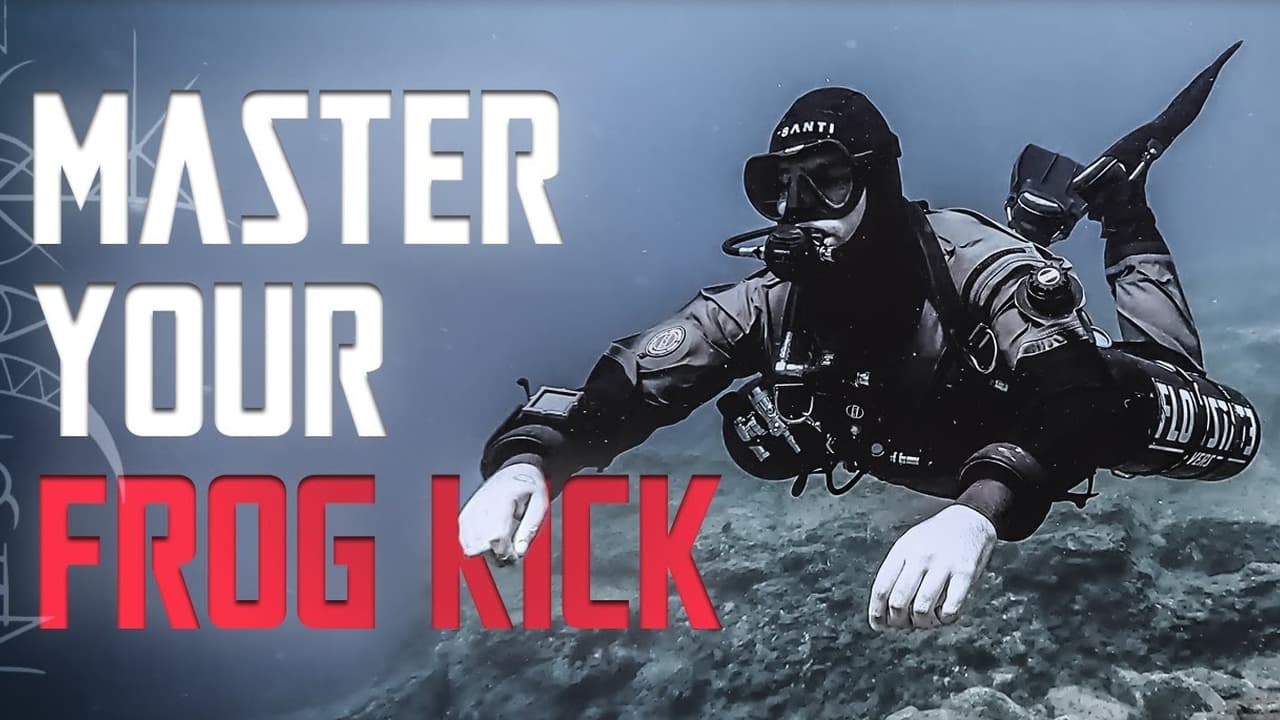
The helicopter turn is more than a flashy skill - it is a demonstration of mastery in underwater control, balance, and efficiency. For divers aspiring to move with precision and grace, this technique is indispensable. Originally born from the cave diving community, the helicopter turn is now a critical part of the skillset for any diver who values fine-tuned movement, safety, and environmental awareness. This article serves as an in-depth companion to the video tutorial, expanding on the concepts presented and offering detailed guidance for achieving true proficiency.
At its core, the helicopter turn is the ability to rotate 360 degrees (or less) around your vertical axis without moving forward or backward, all while maintaining perfect trim. This technique is essential for:
- Confined space navigation (e.g., wrecks, caves, or narrow coral passages)
- Energy efficiency when changing direction
- Minimising environmental disruption
- Effective buddy management and emergency response
Let’s explore each of these in more detail.
Cave divers were the first to formalise this technique out of sheer necessity. When exploring underwater tunnels, there's often no space to make a wide, sweeping turn. A diver must rotate in place without disturbing silt or risking impact with fragile formations. The helicopter turn was developed as a silent, controlled method to pivot within such tight environments.
Today, even recreational divers benefit from adopting this skill - especially in any dive that demands precise control or where visibility and space are limited.
Although born in caves, the helicopter turn has become a vital technique in open water scenarios as well. Among its many benefits:
- Streamlined Movement: Being able to change direction without adding propulsion in other directions preserves your position and reduces drag.
- Environmental Protection: Coral reefs, silt beds, and marine life can be easily disturbed by poor finning. This technique helps keep the water column calm.
- Situational Awareness: When dealing with a dive buddy emergency, such as a gas-sharing event, turning to face your buddy quickly and precisely could save vital seconds.
- Photo/Video Framing: Underwater photographers and videographers use this maneuver to reframe their shot without repositioning themselves drastically.
Understanding this manoeuvre involves dissecting the coordination between your legs and recognising how each contributes to the motion.
- The turn direction is opposite to the pushing leg.
- One leg pushes, the other pulls.
- You rotate around your vertical axis without shifting forward or back.
The turn is a combination of two different fin techniques:
- Frog Kick Motion (Pushing Leg): One leg performs a motion similar to a frog kick but only partially - pushing water to the side and initiating rotation.
- Back Kick Motion (Pulling Leg): The opposite leg engages in a movement derived from a back kick, pulling water to assist in the turning motion.
In a rightward turn
- Left leg pushes (bottom of the blade pushing water to the right)
- Right leg pulls (upper blade side pulling water to the left)
In a leftward turn:
- Right leg pushes
- Left leg pulls
This bilateral engagement allows for a smooth pivot - if done with control.
As with all advanced diving techniques, the path to proficiency lies in isolation, repetition, and integration. Rushing into doing the full maneuver without solid fundamentals will only lead to frustration or poor form.
- Begin by choosing one leg (start with your dominant leg).
- Practice pushing gently with the bottom blade surface outward to induce rotation.
- Your body should begin to pivot in the opposite direction.
- Perform a full 360° rotation using only this leg - then switch sides.
- If this is challenging, revisit the frog kick technique, as it forms the base.
- Focus on mimicking the back kick, but limit the motion to a gentle pull.
- Initiate the motion by rotating the fin outward, using the top blade surface.
- Again, practice completing a rotation in both directions using only this motion.
- If you struggle, you must improve your back kick first - this is critical.
- Now blend both motions: one leg pushes while the other pulls.
- Start slow. Pay attention to body position - your hips and shoulders should remain level.
- Watch your trim - it must stay perfectly horizontal, or the motion becomes erratic.
- Practise both directions until the motion is smooth, symmetrical, and controlled.
No finning technique will be effective without neutral buoyancy. If you're sinking or rising, your legs will naturally shift out of trim, and you'll have to compensate. Before working on helicopter turns:
- Conduct a proper buoyancy check.
- Fine-tune your trim using appropriate tank, weight, and gear configuration.
- Remove any excess air from your wing or suit to prevent movement during the turn
Body Awareness and Core Engagement
Think of the turn as a full-body movement, not just a leg movement. Engage your core muscles to keep your torso steady. Avoid using your arms to initiate or stabilize the turn - this defeats the purpose.
Mastering the helicopter turn requires refined control, and along the way, divers often encounter recurring mistakes. Recognising these issues early and addressing them deliberately will help streamline your progress.
Kicking too hard is one of the most frequent issues. When a diver applies too much force with the fins, the result is often over-rotation or unintended forward movement. This defeats the purpose of the maneuver, which is to rotate in place. The correction is simple but vital: slow down. Use gentle, precise movements with minimal force, focusing on control rather than speed or power.
Another common issue is breaking the surface with your fin tips, which can cause splashing and a noticeable loss of control. This usually stems from having your legs too high in the water column or from poor trim. The solution is to lower your legs slightly and fine-tune your body position so that your fins remain fully submerged and parallel with your torso throughout the turn.
Many divers also unconsciously start using their arms to maintain balance or direction, which is a sign of poor core stability or inadequate trim. This not only breaks form but also disrupts the neutral flow of movement. The fix here is to keep your arms still - ideally folded or held close to the body - and consciously engage your core muscles to stabilize your torso and guide your movement.
Some divers struggle with using only one leg effectively, resulting in uneven or incomplete turns. This usually happens when one leg is more dominant or trained than the other. To correct this, isolate and practice with each leg individually. Perform full turns using just the pushing motion on each side, then repeat with just the pulling motion. This builds bilateral control and corrects the imbalance.
Finally, stirring up silt or creating visibility issues is a sign that buoyancy or fin control is off. If you notice that your turns leave a cloud behind you, it's time to revisit your buoyancy skills. Ensure that you're properly weighted and neutrally buoyant, and keep your fin movements subtle and well-controlled to avoid disturbing the environment.
By addressing these common mistakes with focused practice and attention to detail, you’ll refine your helicopter turn into a precise, fluid, and environmentally respectful manoeuvre.
The helicopter turn is not merely a show-off skill - it reflects a diver’s complete control over their position, trim, and environment. It also serves as a gateway to other high-level propulsion techniques and contributes to overall dive safety.
By breaking the movement into its components, committing to methodical practice, and ensuring solid buoyancy fundamentals, any diver can master the helicopter turn. As with all aspects of skillful diving, the key lies in precision, patience, and consistency.