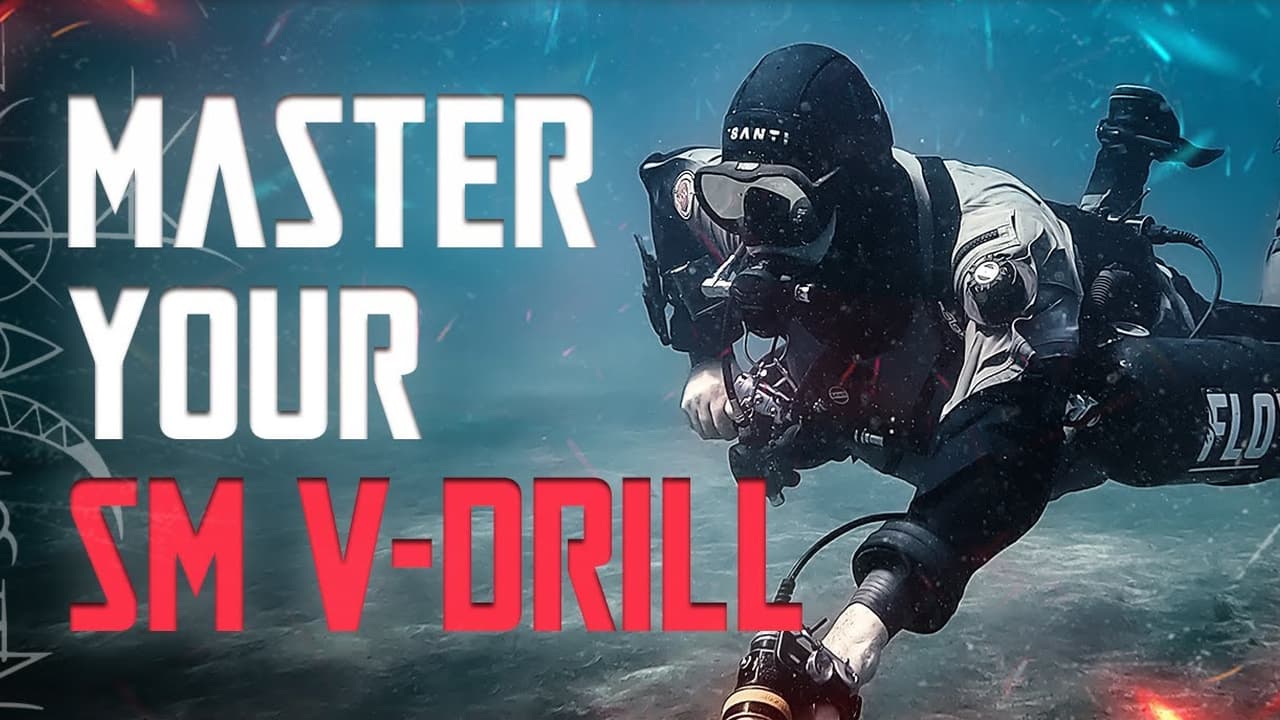
Sidemount diving has evolved into more than just an alternative way to carry gas. It’s a configuration revered for its flexibility, redundancy, and streamlining potential. At the heart of mastering this configuration lies one of the most revealing and essential exercises a sidemount diver can undertake: the sidemount valve drill. Far from being a mechanical routine, this drill serves as a cornerstone in the development of a diver’s equipment awareness, composure, and muscle memory.
All too often, divers approach skills practice as a performance - ticking boxes, rushing motions, and prioritising flair over function. The sidemount valve drill, however, demands the opposite mindset. It is not about developing a party trick; it’s about internalising a safety protocol so deeply that, when crisis strikes, your response is automatic, calm, and precise.
Speed is a byproduct of competence - not a goal in itself. By beginning with a deliberate, slowed-down approach, divers learn to appreciate each component of the drill, embedding proper habits and understanding their equipment in intimate detail. In time, this practice forges fluid, instinctive reactions that could make all the difference during real-world equipment failures.
Consider a free-flowing second stage at depth. Or a creeping failure in a first stage that demands immediate isolation. Your ability to identify the fault, switch regulators, shut down a valve, and stabilise the situation without surfacing relies on the skills rehearsed in this very drill. But you won't rise to the occasion - you’ll fall to your level of preparation. The valve drill is that preparation.
Let’s dissect the full sequence of the sidemount valve drill, as refined by extensive in-water experience and feedback. Each step is intentional, offering layers of training benefit.
Before doing anything, gain the attention of your teammates. Use your primary light to signal the start of the drill. This establishes a shared understanding and prevents your team from misinterpreting your movements as an emergency.
Look at which regulator you are currently breathing from. Purge the alternate second stage briefly to ensure its valve is fully open and that the system is correctly pressurised. This acts as a quick validation of readiness.
Signal again using your light. Shut down the valve of the cylinder from which you are currently breathing. Maintain continuous eye contact with a teammate throughout this procedure. This isn’t just about buddy awareness - it removes visual crutches. You must know your configuration. If your muscle memory and spatial awareness are intact, you should be able to locate valves, D-rings, and accessories without looking.
Once the valve is closed, breathe down the hose - a vital step to confirm it is indeed shut and to simulate gas depletion.
Then, make a regulator switch to the alternate second stage.
After a brief pause, reopen the valve you just shut. But here, a crucial nuance emerges. Many first stages are designed in a way that a sudden rush of pressure upon reopening the valve can displace the o-ring, triggering a freeflow. To avoid this:
- Begin the rotation gently, just enough to allow pressure to enter the system.
- Once the system is pressurised, you may finish opening the valve more quickly.
Purge the relevant second stage to confirm flow. If it’s the long hose, unclip it from your D-ring to allow for smoother reattachment later on, especially if returning to it.
Now repeat the procedure for the opposite cylinder. Here, transfer your primary light to your right hand in a temporary hold - not fully mounted - so your left hand is free to manipulate the valve. It’s true that with the right post shut, you cannot donate gas, but this temporary hold encourages consistent light-handling habits during all drills and scenarios.
Close the valve, breathe down the regulator, switch back, wait a few seconds, and reopen gently, just as before.
Once both cylinders have been tested and reopened, verify that each valve is fully open, and that regulators are correctly positioned - the long hose should be clipped off, the bungee reg in your mouth, and SPGs easily accessible.
Now, check the pressure on both cylinders. Communicate this with your teammates. If there’s a notable imbalance, consider switching to the higher-pressure cylinder, depending on the circumstances and your gas plan.
The valve drill is a showcase of several core skills. While the drill itself is structured, the following micro-skills are worth individual attention:
In sidemount, confusion can occur if hoses are misrouted or poorly configured. Train yourself to distinguish your second stages by feel and location.
This is a practical skill with direct applications during emergencies. Train it deliberately, under supervision if necessary.
There are different methods depending on configuration - arm routing, bungee placement, and hose length all affect accessibility. Find what works best, and be consistent.
Properly clipping and unclipping the long hose, without entanglement or delay, is a subtle but essential art. Practice until it's second nature.
A few recurrent issues to watch for during practice:
- Valve re-opening too forcefully, causing unnecessary freeflows.
- Losing track of which regulator you’re on, especially if you don’t purge before beginning.
- Light management issues, especially during right-cylinder shutdowns.
- Lack of team awareness, particularly when diving with new or unfamiliar buddies.
The sidemount valve drill isn’t about ticking boxes - it’s about developing a relationship with your equipment, your body, and your mind under pressure. Each repetition should bring more clarity, not just more speed. As skills become ingrained, they no longer exist as distinct “drills,” but as seamless parts of your diving practice.
Diving, at its finest, is a blend of composure, precision, and awareness. The valve drill embodies all three. Learn it properly, practise it regularly, and treat it with the respect it deserves - not just as a skill, but as a discipline.
For a more granular look at the individual elements mentioned here - such as one-handed reg switches, SPG checking techniques, and long hose skills - check out our companion video on sidemount regulator skills. Mastery lies in the details.